Showing posts with label Theologians. Show all posts

Saturday, November 30, 2019

Andrew the Apostle


The next day again John was standing with two of his disciples, and he looked at Jesus as he walked by and said, “Behold, the Lamb of God!” The two disciples heard him say this, and they followed Jesus. Jesus turned and saw them following and said to them, “What are you seeking?” And they said to him, “Rabbi” (which means Teacher), “where are you staying?”  He said to them, “Come and you will see.” So they came and saw where he was staying, and they stayed with him that day, for it was about the tenth hour. One of the two who heard John speak and followed Jesus was Andrew, Simon Peter's brother. He first found his own brother Simon and said to him, “We have found the Messiah” (which means Christ). He brought him to Jesus. Jesus looked at him and said, “You are Simon the son of John. You shall be called Cephas” (which means Peter). -John 1:35-42

The Brother of Peter (Simon) also an apostle, Andrew was a fisherman with his brother and the brothers James and John (sons of Zebedee). He was the frist disciple and originally a disciple of John the Baptizer. Tradition has it that after the resurrection he preached in Scythia (Ukraine and southern Russia). He is the patron saint of Russia. He was crucified spread Eagle in Achaia (southern Greece), where he also preached. That is why Scotland has the St. Andrew's cross.

Saturday, November 9, 2019

Martin Chemnitz


Martin Chemnitz (Nov 9, 1522 – Apr 8, 1586), was the man who Compiled the Book of Concord and is known as the Last Reformer. He is also known as as "the Other Martin." A common saying is, "If Martin [Chemnitz] had not come along, Martin [Luther] would hardly have survived." Besides his compilation, which defined what it meant (and means) to be Lutheran, Chemnitz was a prolific writer of theological treatises and multiple documents about church government and oversight.

Tuesday, October 29, 2019

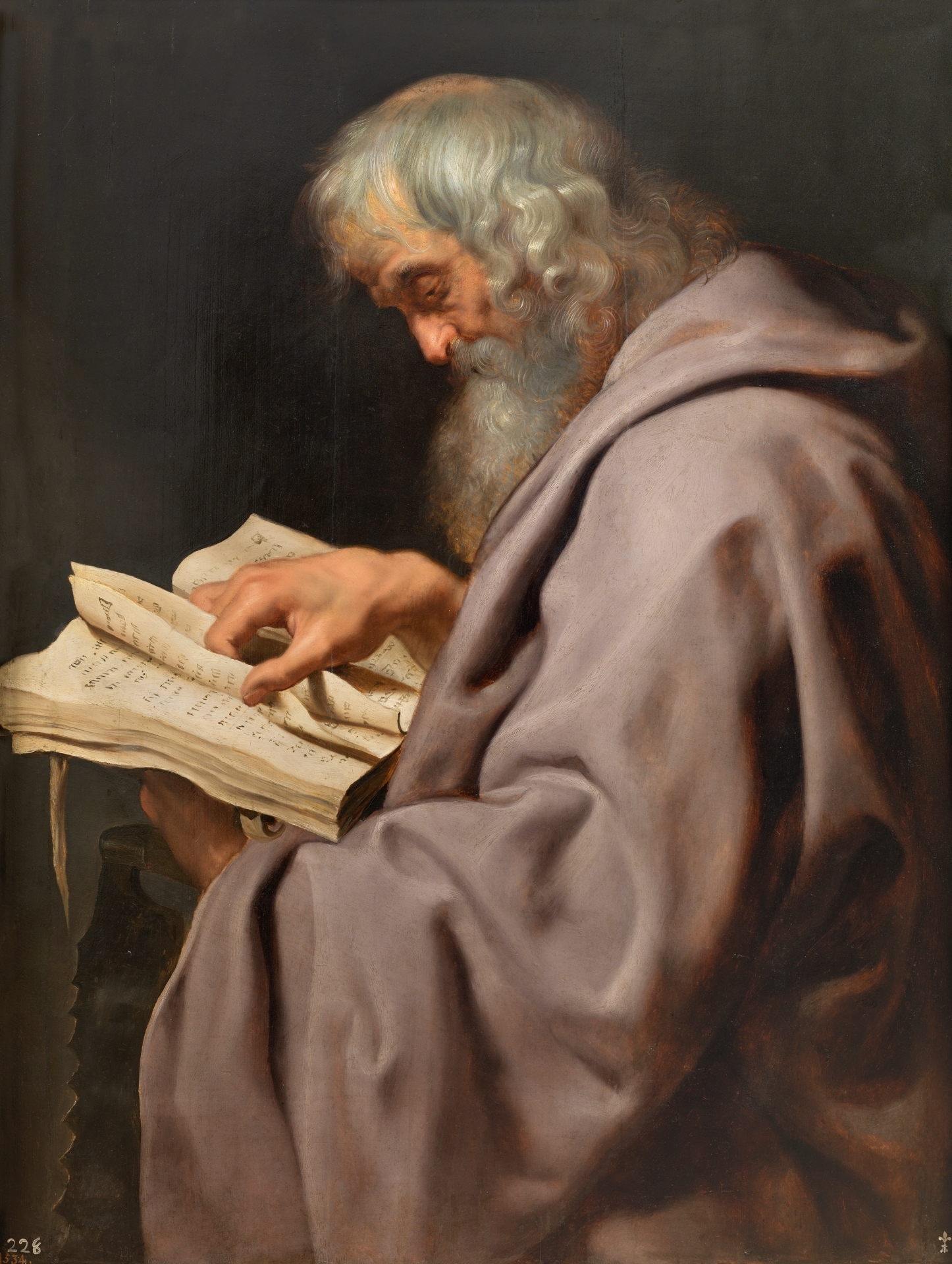
Simon (the Zealot) the Apostle


Little is recorded of him aside from his name. Tradition has it that he Joined Thaddeus (Jude/Judas/Judah son of James) in Persia (Iran) where they were both martyred. He might have been either crucified or more likely hacked to death.

Monday, October 28, 2019

Thaddaeus (Judah/Jude/Judas, son of James) the Apostle


Tradition has it that he preached in Persia, where he joined Simon the Zealot and was killed with him.

Saturday, September 21, 2019

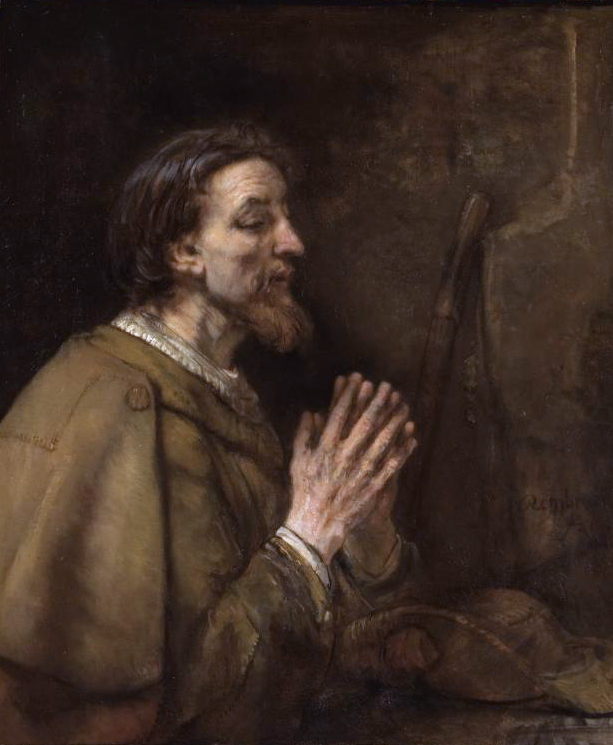
Matthew (Levi son of Alphaeus) the Apostle


And as he passed by, he saw Levi the son of Alphaeus sitting at the tax booth, and he said to him, “Follow me.” And he rose and followed him. -Mark 2:14

Matthew was a 1st-century Galilean, the son of Alpheus. During the Roman occupation (which began in 63 BC with the conquest of Pompey), Matthew collected taxes from the Hebrew people for Herod Antipas, the tetrarch of Galilee. His tax office was located in Capernaum. Jews who became rich doing that were despised and considered traitors. wrote the Gospel of Matthew. Don't know where he preached after Jesus.

Saturday, August 24, 2019

Bartholomew (Nathanael) the Apostle


Philip found Nathanael and said to him, “We have found him of whom Moses in the Law and also the prophets wrote, Jesus of Nazareth, the son of Joseph.” Nathanael said to him,“Can anything good come out of Nazareth?” Philip said to him, “Come and see.” Jesus saw Nathanael coming toward him and said of him, “Behold, an Israelite indeed, in whom there is no deceit!” Nathanael said to him, “How do you know me?” Jesus answered him, “Before Philip called you, when you were under the fig tree, I saw you.” Nathanael answered him, “Rabbi, you are the Son of God! You are the King of Israel!” -John 1:45-49

Tradition has it he was martyred either in Derbent, north of present day Badu on the Caspian sea, or in what is now India by being flayed or skinned alive and then beheaded.

Saturday, August 17, 2019

Johann Gerhard

Johann Gerhard (Oct 17, 1582 – Aug 17, 1637) studied theology and philosophy (and a couple years of medicine) and graduated in 1605.  By 1616, when he was only 33 years old, he became the senior theological professor at Jena and was soon considered the greatest theologian of his time. He was also a prolific author.

Gerhard helped to develop Lutheran scholasticims during the Lutheran High Orthodoxy period, which lasted from 1600 to 1685. The main purpose of this was to educate people to defend the faith, especially against the Jesuits at the time.

One interesting thing that he contributed was the seven duties of a pastor in his "Commonplaces: Locus on the Ministry"
  1. Preaching the heavenly Word
  2. Administering the sacraments
  3. Praying for the flock entrusted to him
  4. Honorable managers of their life and behavior
  5. Take care of the administration of church discipline
  6. Preserve ecclesiastical rights
  7. Take care of the poor and visit the sick

Saturday, August 10, 2019

Lawrence, Deacon and Martyr


Lawrence (225-258) was one of the seven deacons in ancient Rome that were martyred under Emperor Valerian on August. Not much is really known about his life and ministry, but there are many legends about miracles he performed and his connection to the Holy Grail.

Thursday, July 25, 2019

James (son of Zebedee) the Apostle


And going on from there he saw two other brothers, James the son of Zebedee and John his brother, in the boat with Zebedee their father, mending their nets, and he called them. Immediately they left the boat and their father and followed him. -Matthew 4:21-22

He was the brother of John (son of Zebedee) who was also an Apostle. He was a fisherman with his brother and brothers Peter (Simon) and Andrew.  He preached to the Jews and was beheaded in AD44 under Herod Agrippa I, making him the first Apostle to be martyred.

About that time Herod the king laid violent hands on some who belonged to the church. He killed James the brother of John with the sword -Acts 12:1-2

Wednesday, June 5, 2019

Boniface


Boniface (c. 675 – June 5, 754) was an Anglo-Saxon missionary to the Frankish Empire during the 8th century (i.e. a Missionary to Germans). Some traditions also claim that Boniface invented the use of the Christmas tree.

Saturday, June 1, 2019

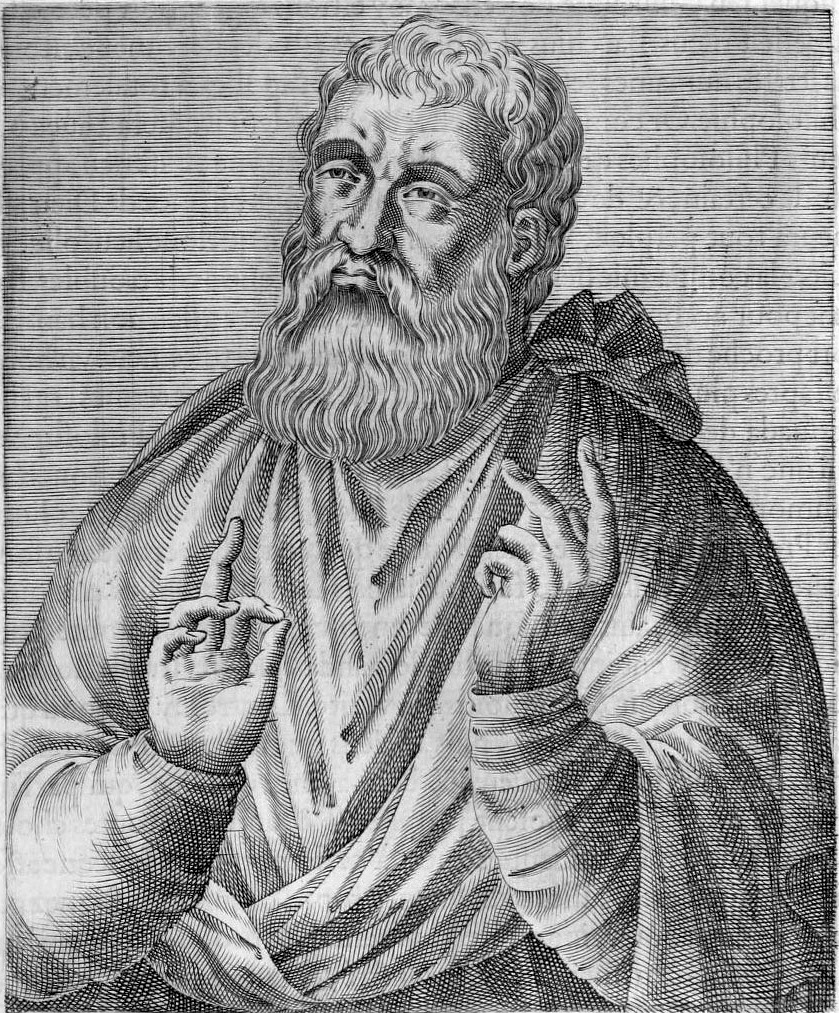
Justin Martyr


Justin Martyr (100 - 165 AD) was an early church apologist who wrote about the manifestation of the Logos (or the Word made flesh). Justin had his own school in Rome with Tatian was one of his pupils. Tatian (Address to the Greeks 19) and Eusebius (HE IV 16.7-8) tell us  that, after disputing with the cynic philosopher Crescens, he was denouncedto the authorities, tried with six companions, and beheaded. The martyrdom of Justin preserves the court record of the trial:
The Prefect Rusticus says: Approach and sacrifice, all of you, to the gods. Justin says: No one in his right mind gives up piety for impiety. The Prefect Rusticus says: If you do not obey, you will be tortured without mercy. Justin replies: That is our desire, to be tortured for Our Lord, Jesus Christ, and so to be saved, for that will give us salvation and firm confidence at the more terrible universal tribunal of Our Lord and Savior. And all the martyrs said: Do as you wish; for we are Christians, and we do not sacrifice to idols. The Prefect Rusticus read the sentence: Those who do not wish to sacrifice to the gods and to obey the emperor will be scourged and beheaded according to the laws. The holy martyrs glorifying God betook themselves to the customary place, where they were beheaded and consummated their martyrdom confessing their Savior.

Saturday, May 25, 2019

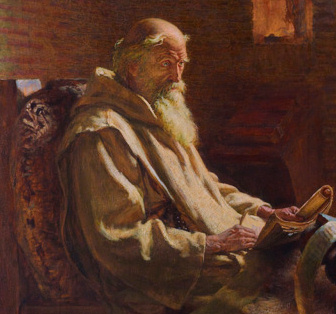
Bede the Venerable


Bede the Venerable (672/673 – May 26, 735) was an early church English monk and theologian. Bede wrote scientific, mathematic, historical, musical and theological works. His most famous work,The Ecclesiastical History of the English People) earned him the title "The Father of English History"

Saturday, April 20, 2019

Johannes Bugenhagen


Johannes Bugenhagen (24 June 1485 – 20 April 1558) was Martin Luther's Pastor and Confessor at St. Mary's church in Wittenberg. Before the reformation, he encouraged Luther and was a major influence on him. During the reformation, he outlined ideas on what to focus on and created new church orders in northern Germany to reform the church.  He was one of the great early reformers.

Sunday, February 24, 2019

Matthias the Apostle


Acts 1:15-26


In those days Peter stood up among the brothers (the company of persons was in all about 120) and said,  “Brothers, the Scripture had to be fulfilled, which the Holy Spirit spoke beforehand by the mouth of David concerning Judas, who became a guide to those who arrested Jesus. For he was numbered among us and was allotted his share in this ministry.” (Now this man acquired a field with the reward of his wickedness, and falling headlong he burst open in the middle and all his bowels gushed out. And it became known to all the inhabitants of Jerusalem, so that the field was called in their own language Akeldama, that is, Field of Blood.) “For it is written in the Book of Psalms [69:25],
“‘May his camp become desolate,
    and let there be no one to dwell in it’;
and [109:8]
“‘Let another take his office.’
 So one of the men who have accompanied us during all the time that the Lord Jesuswent in and out among us, beginning from the baptism of John until the day when he was taken up from us—one of these men must become with us a witness to his resurrection.” And they put forward two, Joseph called Barsabbas, who was also called Justus, and Matthias. And they prayed and said, “You, Lord, who know the hearts of all, show which one of these two you have chosen to take the place in this ministry and apostleship from which Judas turned aside to go to his own place.” And they cast lots for them, and the lot fell on Matthias, and he was numbered with the eleven apostles.

This year it also happens to fall on Sexegesima Sunday, where there is 8 weeks until Easter.

Monday, February 18, 2019

Martin Luther's Nicknames

Just for fun, I have compiled a list of Martin Luther's nicknames. When Luther was in college and graduate school to become a lawyer between 1497 and 1505, he spent so much time in public debate and was so good at it that he earned the nickname "the philosopher."


The Philosopher

In 1518 Martin Luther began the reformation by posting the 95 Theses and a papal bull was issued on June 15, 1520 condemning him and other reformers for questioning Roman Catholic teaching, "Listen to our prayers, for foxes have arisen seeking to destroy the vineyard whose winepress you alone have trod.... The wild boar from the forest seeks to destroy it and every wild beast feeds upon it."

A fox and a wild boar

After the papal bull was issued, Luther grew out his hair and beard and went into hiding in Wittenberg, going by Junker Jörg. The German word Junker means an aristocrat, young German nobleman, young Lord, country squire, or lesser nobleman.

Junker Jörg
Later in life Luther, comparing Melanchthon and his style said, “Philipp stabs, too, but only with pins and needles.  The pricks are hard to heal and they hurt.  But when I stab, I do it with a heavy pike used to hunt boars.” Luther also stated that Rome was being stubborn and "A knotty stump requires a tough wedge."  During Luther's funeral, Melanchthon stated that a "bad disease" (Catholicism) needed a "harsh doctor" (luther)


A heavy pike, a tough wedge, and a harsh doctor

Thursday, February 14, 2019

St. Valentine's Day


Nothing is reliably known of St. Valentine except his name and the fact that he died on February 14 as a martyr. The feast of St. Valentine's became associated with romantic love in the middle ages for unknown reasons, but possibly due to fictional traditions that Geoffrey Chaucer made up in his writings.
________________________________________________________________

Since this is a holiday that has turned into a day about love, I thought I would take the opportunity to correct a pet misinterpretation of mine. 1 Corinthians 13:13: "So now faith, hope, and love abide, these three; but the greatest of these is love."

The "now" in verse 13 is not a temporal now, but a logical now.  It means, "therefore" because it is the conclusion to verse 12.  Verse 13 must be read in context of the immediately preceding verse 12: "For now we see in a mirror dimly, but then face to face. Now I know in part; then I shall know fully, even as I have been fully known."

Currently, we have faith, hope and love.  We will know fully in heaven, so our hope will be fulfilled and we won't need faith, when we see God face to face.  Therefore, all that will remain is love.

Sunday, February 10, 2019

Peter (Simon) the Apostle


The next day again John was standing with two of his disciples, and he looked at Jesus as he walked by and said, “Behold, the Lamb of God!” The two disciples heard him say this, and they followed Jesus. Jesus turned and saw them following and said to them, “What are you seeking?” And they said to him, “Rabbi” (which means Teacher), “where are you staying?”  He said to them, “Come and you will see.” So they came and saw where he was staying, and they stayed with him that day, for it was about the tenth hour. One of the two who heard John speak and followed Jesus was Andrew, Simon Peter's brother. He first found his own brother Simon and said to him, “We have found the Messiah” (which means Christ). He brought him to Jesus. Jesus looked at him and said, “You are Simon the son of John. You shall be called Cephas” (which means Peter). -John 1:35-42

He was the brother of Andrew, also an apostle. He was a fisherman with his brother and the brothers James and John (sons of Zebedee). After Jesus death and resurrection, he worked among the Jews for a while and then went to Rome, where he was the first bishop in the Church.  Catholics call him the first pope. Tradition has it he was crucified head down at his request because he did not consider himself worthy to be crucified like Jesus was. Martyred by Nero under his persecutions in AD64.

Thursday, December 27, 2018

John (Son of Zebedee) the Apostle


And going on from there he saw two other brothers, James the son of Zebedee and John his brother, in the boat with Zebedee their father, mending their nets, and he called them. Immediately they left the boat and their father and followed him. -Matthew 4:21-22

He was a fisherman with his brother James (sons of Zebedee), also an apostle, and the brothers Peter (Simon) and Andrew. He took Mary, the mother of Jesus, as his adopted mother (took care of her) (John 19:26-27).  Wrote the Gospel of John, the three letters of John and Revelation around AD 70, while exiled on the island of Patmos. Tradition has it that he preached in Jerusalem, and later was the bishop of Ephesus, in western Turkey, where he died a natural death around AD 100.

Friday, December 21, 2018

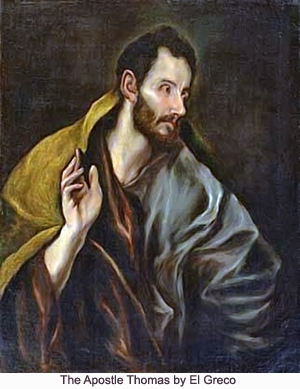
Thomas the Apostle


He was nicknamed Didymus because he was a twin. Basically they called him Ditto. Tradition has it that he was speared to death near Madras on the East coast.

Thomas first speaks in the Gospel of John. In John 11:16, when Lazarus has just died, the apostles do not wish to go back to Judea, where Jews had attempted to stone Jesus. Thomas says: "Let us also go, that we may die with him"

He speaks again in John 14:5. There, Jesus has just explained that he is going away to prepare a heavenly home for his followers, and that one day they will join him there. Thomas reacts by saying, "Lord, we don’t know where you are going, so how can we know the way?"

John 20:24-29 tells how Thomas was skeptical at first when he heard that Jesus had appeared to the other apostles, saying "Unless I see the nail marks in his hands and put my finger where the nails were, and put my hand into his side, I will not believe." (v.25) But when Jesus appeared later and offered to let Thomas see and touch his wounds, Thomas showed his belief by proclaiming, "My Lord and my God!" (v.28)

Thursday, December 6, 2018

St. Nicholas of Myra


St. Nicholas of Myra (March 15, 270 – December 6, 343) was the bishop of Myra and signed the Nicene Creed at the First Ecumenical Council 325. He had a reputation for secret gift-giving, such as putting coins in the shoes of those who left them out for him, and thus became the model for Santa Claus.